

Surgical Sutures
What is Surgical Sutures?
Surgical sutures are medical devices used to hold tissues together after a wound or incision has been made during a surgical operation. They are made of a variety of materials, including natural fibers such as silk or cotton, as well as synthetic materials like nylon or polyester. Sutures are available in different sizes, shapes, and types that serve different purposes, such as knotless sutures that provide a faster and more comfortable healing process. They are inserted and tied in a specific pattern to close the incision or wound and provide stability and support for the healing process. Sutures may be absorbable or non-absorbable, and the choice depends on the location and nature of the wound.
Why Choose Us?
Customer Satisfaction
We are committed to delivering high quality services that exceed our clients' expectations. We strive to ensure that our clients are satisfied with our services and work closely with them to ensure their needs are met.
Competitive Pricing
We offer competitive pricing for our services without compromising on quality. Our prices are transparent, and we do not believe in hidden charges or fees.
State-of-the-art Technology
We use the latest technology and tools to deliver high quality services. Our team is well-versed in the latest trends and advancements in technology and uses them to provide the best results.
One-stop service
We promise to provide you with the fastest reply, the best price, the best quality, and the most complete after-sales service.
-
 PDO(POLYDIOXANONE) SuturesBrand Name:Beautlift. Model Number:Beautlift-COG thread. Disinfecting Type:EOSAdd to Inquiry
 -

-
 PGLAR(Polyglactin 910 Rapid) SuturesPayment:TT 30% Deposit. Length:45mm-150mm. Packing:12pcs/boxAdd to Inquiry
 -
 PGAR(Polyglycolic Acid Rapid) SuturesDisinfecting Type:Ultrasonic. Properties:Medical Adhesive & Suture Material. Size:USP 8/0 - 2.Add to Inquiry
 -
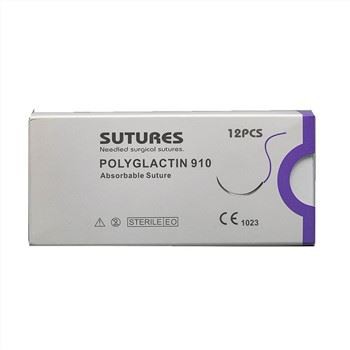 VICRYL/PGLA(Polyglatin 910) SuturesPlace of Origin:Hebei, China. Brand Name:blue bio. Model Number:surgical suture threadAdd to Inquiry
 -
 PGA(PolyglycolicAcid) SuturesPlace of Origin:Shandong, China. Brand Name:shangpin. Model Number:USP8/0-USP2#.Add to Inquiry
 -
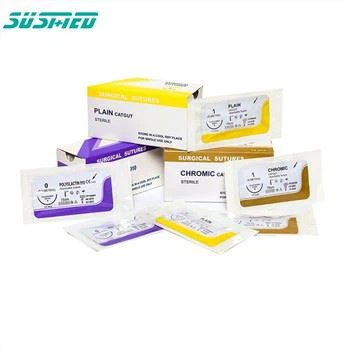 Chromic, Plain SuturesBrand Name:Sinoland. Model Number:WANL. Properties:surgical sutureAdd to Inquiry
 -
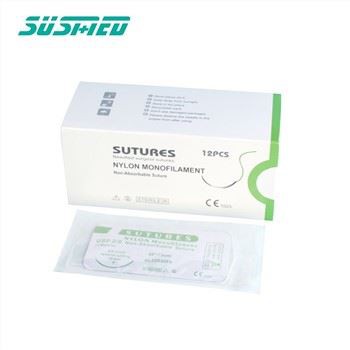 Nylon SuturesBrand Name:CNMEDITECH. Model Number:CNME080101-9. Disinfecting Type:EOS.Add to Inquiry
 -
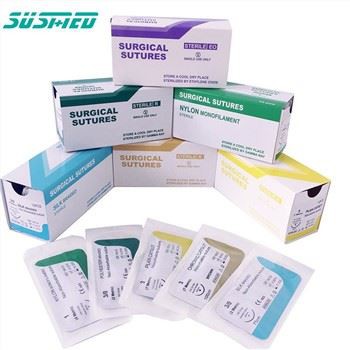 Polyproplene SuturesBrand Name:MSL. Model Number:MSLFU01. Disinfecting Type:Far Infrared.Add to Inquiry
 -
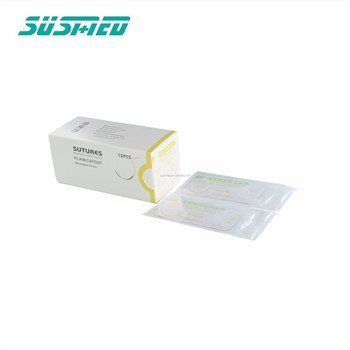 Polyester SuturesDisinfecting Type:Ultrasonic. Properties:Medical Adhesive & Suture Material. Size:Different.Add to Inquiry
 -
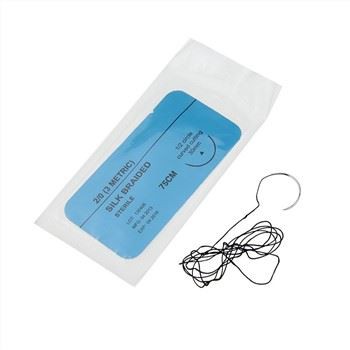 Silk SuturesPlace of Origin:Hebei, China. Brand Name:surgical suture. Model Number:silk nylon chromic catgut.Add to Inquiry
 -
 Nylon Surgical SuturePlace of Origin:Jiangsu, China. Brand Name:SUSMED. Model Number:nylon.Add to Inquiry


- Tel: +8613101959636
- Email: Susmed@aliyun.com
- Add: Room 815, Block C, Canal City Square Plaza, Yangzhou, Jiangsu, China
Benefits of Surgical Sutures
Our advantage
Choose the plan that suits you best.
Promotes Wound Healing
Sutures help to close the wound edges and promote the natural healing process by ensuring the proper alignment of tissues and minimizing the risk of infection.
Reduces Scarring
Properly placed sutures can minimize the formation of scars and reduce the risk of hypertrophic or keloid scars.
Rapid Wound Closure
Sutures enable quicker wound closure, as compared to letting the wound heal naturally without medical intervention.
Prevents Bleeding
Sutures help to prevent bleeding by applying pressure on the wound edges and sealing small vessels.
Helps to Realign Tissues
Sutures help to bring and hold together edges of cut and damaged tissues, which allows new tissue to grow connecting the two sides.
Reduces Pain and Discomfort
Sutures can help to reduce pain and discomfort by ensuring that the wound remains closed and doesn't rub against clothing or other surfaces.
Minimizes Infection Risk
Sutures can help to minimize the risk of infection by closing wounds and creating a barrier against bacteria and other pathogens.
Improved Surgical Outcomes
The use of surgical sutures can improve surgical outcomes by ensuring that surgical wounds heal properly, reducing the risk of complications, and facilitating faster healing times.
Types of sutures
The different types of sutures can be classified in many ways.
First, suture material can be classified as either absorbable or nonabsorbable.
Absorbable sutures don't require your doctor to remove them. This is because enzymes found in the tissues of your body naturally digest them.
Nonabsorbable sutures will need to be removed by your doctor at a later date or in some cases left in permanently.
Second, the suture material can be classified according to the actual structure of the material. Monofilament sutures consist of a single thread. This allows the suture to more easily pass through tissues. Braided sutures consist of several small threads braided together. This can lead to better security, but at the cost of increased potential for infection.
Third, sutures can be classified as either being made from natural or synthetic material. However, since all suture material is sterilized, this distinction is not particularly useful.

Types of absorbable sutures
Gut. This natural monofilament suture is used for repairing internal soft tissue wounds or lacerations. Gut shouldn't be used for cardiovascular or neurological procedures. The body has the strongest reaction to this suture and will often scar over. It's not commonly used outside of gynecological surgery.
Polydioxanone (PDS). This synthetic monofilament suture can be used for many types of soft tissue wound repair (such as abdominal closures) as well as for pediatric cardiac procedures.
Poliglecaprone (MONOCRYL). This synthetic monofilament suture is used for general use in soft tissue repair. This material shouldn't be used for cardiovascular or neurological procedures. This suture is most commonly used to close skin in an invisible manner.
Polyglactin (Vicryl). This synthetic braided suture is good for repairing hand or facial lacerations. It shouldn't be used for cardiovascular or neurological procedures.
Types of nonabsorbable sutures
Some examples of nonabsorbable sutures can be found below. These types of sutures can all be used generally for soft tissue repair, including for both cardiovascular and neurological procedures.
Nylon. A natural monofilament suture.
Polypropylene (Prolene). A synthetic monofilament suture.
Silk. A braided natural suture.
Polyester (Ethibond). A braided synthetic suture.
Sutures vs. stitches
You'll often see sutures and stitches referred to interchangeably. It's important to note that “suture” is the name for the actual medical device used to repair the wound. The stitching is the technique used by your doctor to close the wound.

Important Points To Keep In Mind For Surgical Sutures
Silk braided non-absorbable sutures help to hold the two organs together and prevent the building. Any damage reported in any part of the body can be cured with the help of these stitches. They try to hold different parts of the body together so that they get attached over a period of time naturally. They can be used with the help of a needle which helps to stitch the two different tissues together with each other. The important features of this particular stitch have been given in the following way.

They Are Soluble Stitches
These stitches are not made up of ordinary thread. They are made up of different minerals and soluble compounds, which are solidified in the form of a thread-like structure. It is important to mention that most of the stitches are soluble in nature. It means when the body organ of the body tissue gets damaged, and it has to be stitched with the help of this thread.
Then if such a situation happens, that thread dissolves over the period of time inside the body of a person to supply the essential minerals. Using the black braided silk surgical suture is a very convenient method because some time back, these threads had to be removed back from inside the body of the person. But now, this is not the case because it automatically gets dissolved inside.
It Can Be Used To Close The Wound
The most important application of this medical equipment is to close a wound that has been badly exposed. Whenever there is an injury that can be controlled easily, blood plasma comes outside the body to prevent the bleeding by increasing clotting of the blood.
But when the size of the wound is so large that even the quantity of the blood plasma cannot be sufficient to stop the bleeding. Then stitches must be the last option. This is an effective method to cure the wound in a very speedy way. It does not even cause any kind of side effects, and that is why most of the doctors use this technique even on children.
Least Tissue Reaction
This particular stitch is made up with the help of silk polymer. It does not cause any reaction inside the body whenever it is used to hold two tissues together with each other. It is one of the most convenient methods, with the help of which is the best and the safest technique of curing wounds.
It can be generated without even causing any kind of side effects. Most of the doctors find it safe, and that is why it is incorporated in almost every accidental treatment.
Surgical sutures can be made from a variety of materials
Silk: This is a natural, protein-based material that is commonly used for non-absorbable sutures.
Nylon: This is a synthetic material that is commonly used for non-absorbable sutures. It is strong and durable.
Polypropylene: This is a synthetic material that is commonly used for non-absorbable sutures. It is very strong and resistant to stretching.
Polyglycolic acid (PGA): This is a synthetic material that is commonly used for absorbable sutures. It is broken down by the body over time.
Polyglactin (PGLA): This is a synthetic material that is commonly used for absorbable sutures. It is a combination of glycolic acid and lactic acid, and is broken down by the body over time.
Catgut: This is a natural material that is made from the intestines of sheep or goats. It is commonly used for absorbable sutures.
Absorbable Sutures Benefits
Sutures play a vital role in wound closure, allowing tissues to heal properly and securely. While traditional sutures made from non-absorbable materials have been widely used, absorbable sutures have gained popularity in recent years. These sutures offer several benefits that contribute to improved patient outcomes and simplify the healing process.
One of the key advantages of absorbable sutures is that they eliminate the need for suture removal. Non-absorbable sutures require a separate visit to the healthcare provider for suture removal, which can be inconvenient and time-consuming for patients. Absorbable sutures, on the other hand, are designed to break down naturally over time and get absorbed by the body. This eliminates the need for suture removal, saving both the patient and healthcare provider valuable time.
Absorbable sutures are made from materials that are biocompatible and well-tolerated by the body. This means that they cause minimal tissue reaction and inflammation compared to non-absorbable sutures. The reduced tissue reaction contributes to faster and more comfortable healing for patients. It also lowers the risk of complications such as infection or suture-related complications.
Absorbable sutures come in various formulations and materials, allowing healthcare providers to select sutures with specific absorption rates based on the needs of the wound. Some wounds require sutures that maintain their tensile strength for a longer period before absorption, while others may benefit from sutures that break down more quickly. The ability to customize the absorption rates ensures that the sutures provide optimal support during the critical healing period.
Absorbable sutures support the wound healing process by providing initial tensile strength to hold the tissues together during the early stages of healing. As the sutures gradually break down and get absorbed, they allow the wound to heal naturally. The sutures provide support to the wound until the tissues regain their strength and can bear the stress on their own. This promotes proper wound healing and reduces the risk of wound dehiscence or complications.
Absorbable sutures are available in a variety of sizes and configurations, making them suitable for different types of wounds and surgical procedures. They can be used in both internal and external suturing, providing flexibility for healthcare providers in various medical specialties. The versatility of absorbable sutures makes them a valuable tool in wound closure across different healthcare settings.
With absorbable sutures, patients experience reduced discomfort compared to non-absorbable sutures. The absence of suture removal eliminates the associated pain and anxiety, enhancing patient comfort during the healing process. Patients can focus on their recovery without the added burden of anticipating suture removal appointments.
Your doctor will give you specific instructions for how to take care of your stitches based on the type of absorbable sutures they use. You must follow your doctor's instructions, as they have the most up-to-date information about your particular wound recovery. In general, however, there are some rules to follow.
Keep the area dry. Absorbable sutures are less likely to break down early or get infected if they're dry. You'll want to avoid soaking in tubs — though showering is usually okay after 24 hours — and ensure that you pat the area dry after each rinse.
Don't strain your wound. Because absorbable sutures don't last as long as other types of stitches, you should stay away from activities that could strain the site until you're done healing.
Keep checking your wound. If you notice any soreness, itchiness, or numbness around the stitches, it may be infected. You must keep checking your stitches to be sure that the area is safe from infection.
Change dressings regularly. If your doctor has put a surgical dressing over your sutures, you'll want to follow their instructions about how often to change the dressing. If you get extra sweaty on a hot day, you may need to change the dressing even more often.

What are the Applications of Surgical Sutures?
Incision Closure: Surgical sutures are used to close incisions made during surgery. The type of suture used depends on the size and location of the incision.
Wound Repair: Sutures are also used to repair wounds such as lacerations and punctures. This helps to promote healing and prevent infection.
Tissue Approximation: When surgeons need to bring two pieces of tissue together (such as in a skin graft or plastic surgery), sutures are used to hold them in place.
Hernia Repair: Sutures are used to repair hernias and prevent the tissue from protruding through the muscle wall.
Organ Transplantation: Sutures are used to connect blood vessels and grafts during organ transplantation.
Dental Procedures: Sutures are used in oral surgery, such as wisdom teeth extraction.
Obstetrics & Gynecology: Sutures are used to repair tears during childbirth and to close incisions after a cesarean delivery. They are also used in gynecological surgeries, such as hysterectomies.

Our Factory
Founded in 2019, SUSMED is an ONE-STOP medical, laboratory and Consumables supplier in YANGZHOU, China. ,SUSMED engages in offering our customer one-stop solutions in the medical field, supplying competitive price and top quality products to more than 200 hospitals, clinics, and universities in over 100 countries. SUSMED is located in Yangzhou, a famous scenic city, only 4 hours' drive from Shanghai airport. Since its establishment, the company has been committed to the R & D, production and operation of medical consumables products based on independent research and development, cooperative research and the combination of production, teaching and research mode, constantly seeking the development and innovation
FAQ
Q: What are surgical sutures?
Q: What are surgical sutures made of?
Q: How do surgeons choose the right suture material?
Q: How are surgical sutures sterilized?
Q: How do surgical sutures work?
Q: How long do surgical sutures stay in place?
Q: Are there any risks associated with surgical sutures?
Q: How are surgical sutures removed?
Q: Can surgical sutures be reused?
Q: Can surgical sutures cause scarring?
Q: Are there any alternatives to surgical sutures?
Q: Do all surgical procedures require sutures?
Q: Can surgical sutures be used for cosmetic purposes?
Q: Are there any special instructions for caring for wounds closed with surgical sutures?
Q: Can surgical sutures cause allergic reactions?
Q: Can surgical sutures be left in place permanently?
Q: Can surgical sutures be used to close internal wounds?
Q: Are there any age restrictions for the use of surgical sutures?
Q: Are surgical sutures covered by insurance?
Q: What should I do if I experience problems with surgical sutures?
