

Glass Syringe
What is Glass Syringe?
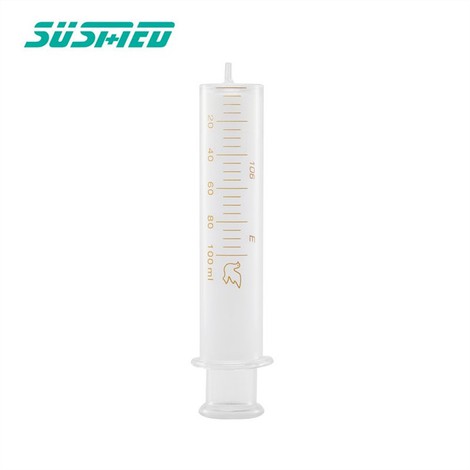
A glass syringe is a type of syringe with a barrel and plunger made of glass. It is commonly used in scientific laboratories for precision measurements and applications such as injecting drugs, extracting samples, and administering medications. Glass syringes are preferred over plastic ones because they are more resistant to chemicals, high temperatures, and sterilization, and they offer better accuracy and control over the quantity and flow of the substance being dispensed. They are also more environmentally friendly because they can be recycled or reused multiple times.
Why Choose Us?
Customer Satisfaction
We are committed to delivering high quality services that exceed our clients' expectations. We strive to ensure that our clients are satisfied with our services and work closely with them to ensure their needs are met.
Competitive Pricing
We offer competitive pricing for our services without compromising on quality. Our prices are transparent, and we do not believe in hidden charges or fees.
State-of-the-art Technology
We use the latest technology and tools to deliver high quality services. Our team is well-versed in the latest trends and advancements in technology and uses them to provide the best results.
One-stop service
We promise to provide you with the fastest reply, the best price, the best quality, and the most complete after-sales service.
-
 Luer Lock Glass SyringeBrand Name:SUSMED. Model Number:1ml 5ml 10ml 20ml 30ml 50ml 100ml. Disinfecting Type:EOSAdd to Inquiry
 -
 Disposable Glass SyringeModel Number:1ml 5ml 10ml 20ml 30ml 50ml 100ml. Disinfecting Type:EOS. Properties:Medical MaterialsAdd to Inquiry
 -
 Glass Syringe with Metal TipPlace of Origin:Shandong, China. Brand Name:Purism. Model Number:En455 Nitrile Gloves G001Add to Inquiry


- Tel: +8613101959636
- Email: Susmed@aliyun.com
- Add: Room 815, Block C, Canal City Square Plaza, Yangzhou, Jiangsu, China
Benefits of Glass Syringe
Glass syringes can resist various corrosive and reactive chemicals that could damage plastic syringes.
Glass syringes can resist extreme high temperatures without any compromising on their structural integrity.
Glass syringes can easily be sterilized and cleaned using various methods like autoclaving and ultrasonic cleaning.
Glass syringes allow for precise and accurate dosage delivery, particularly in small amounts.
Glass syringes are reusable, durable, and don't contribute to the plastic waste problem.
Glass syringes are compatible with various types of medications, which some plastic syringes can't handle.
Glass syringes are made of high-quality materials that don't compromise the quality and safety of the medication.
Glass syringes are ideal for the long-term storage of medications without any risk of leaching or contamination.
Glass syringes provide better visualization of the medication and any potential particles that could affect the quality of the medication.
The use of glass syringes ensures the sterility of the medication as it doesn't react with the chemicals, which could result in contamination.

All syringes are made from heat resistant borosilicate glass. The material and construction is resistant to breakage from shock and sudden temperature changes. They are all annealed and tested until free of internal strain to withstand repeated washing.
Custom Glass Syringes Include Printing A Unique Design Or Logo On The Prefilled Glass Syringe And Changing The Prefilled Glass Syringe's Appearance.
A logo can help a glass syringe stand out from other similar syringes. It can also help create an association between the brand and the company in the minds of consumers.
A well-designed logo can also make the glass syringe more recognizable and memorable.
Firstly, just the following steps can help you own your brand products.
Give us the design or logo file, even in PDF or JPG files.
Our designer will send over a syringe mock-up for your approval. (Usually within 2 hours)
We send the clients the images and videos of a physical sample for confirmation.
Start production of bulk glass syringes (The lead time takes about 7 days)
Then you will have brand prefilled glass syringes It's easy to do!
Secondly, we can change the colors of the glass syringe components, such as the rubber stoppers, and Luer lock head. Even the measurements can be customized too.
Thirdly, We can coat the glass syringe and print unique designs on it. Then unique colorful glass syringes are made.

Types of Glass Syringe

Luer Lock Glass Syringe
This type of glass syringe has a threaded cone-shaped tip that is compatible with a wide variety of needles. The luer lock mechanism ensures that the needle remains securely attached to the syringe during use.
Luer Slip Glass Syringe
Unlike luer lock syringes, luer slip syringes simply slide onto the needle without a locking mechanism. They are typically cheaper and used for applications in which a secure needle attachment is not necessary.
Prefilled Glass Syringe
These syringes are pre-filled with medications or other substances. They are commonly used by healthcare professionals to administer vaccines, insulin, and other injectables.
Gas-Tight Glass Syringe
Gas-tight syringes are designed to prevent gas or liquid from leaking out of the syringe during use. They are commonly used in gas chromatography and other laboratory applications.
HPLC Glass Syringe
HPLC syringes are specifically designed for use with high-performance liquid chromatography systems. They are designed to prevent sample contamination and ensure accurate volume measurement.
Process of Glass Syringe
Raw Materials: The primary raw material used in making glass syringes is borosilicate glass. It is a type of glass with high thermal shock resistance and chemical durability, making it a suitable material for making syringes. Other materials required for the process include colorants, stabilizers, and lubricants.
Glass Tubing Preparation: The glass tubing is prepared by cutting it into shorter lengths. These lengths are cleaned and sorted based on their diameter. A laser-based cutting tool is used to cut the glass tubing, which ensures the accuracy and precision of the cuts.
Glass Molding/Blowing: The glass tubing is then molded or blown into the required shape, which is a syringe body. This process is achieved using a glass blowing/molding machine, where the glass tubing is heated to the required temperature and then blown or molded into the desired shape using compressed air.
Decoration/Printing: After molding, the syringe bodies are decorated or printed as required by the customer. This process involves using a printing machine to print information such as graduations, volume markings, and brand logos onto the syringe body.
Assembly: Once the syringe bodies are decorated or printed, the plunger is assembled into the syringe body. The plunger is made up of a rubber stopper and a piston. The rubber stopper helps to provide an airtight seal, while the piston moves back and forth within the syringe body to draw and expel fluids.
Quality Control: To ensure the quality of the glass syringe, it goes through various quality control checks. These include checks on the glass tubing, molding/breaking process, printing and decoration process, and assembly process. The syringes are also checked for their functionality and sterility.
Packaging: Finally, the glass syringes are packaged, be it in tubs, bags, or individual boxes, based on the customer's requirements. The packaging is done carefully, as glass syringes are fragile and can break easily if not handled with care.

The components of a glass syringe
Barrel
This is the main body of the syringe made of glass that holds the medication to be injected.
Plunger
This is a movable component that helps in pushing the medication out of the barrel.
Seal
It is a rubber or silicone ring that creates a tight seal between the barrel and plunger.
Needle
This is a small, thin metal tube that is attached to the barrel and used to administer the medication.
Hub
This is a plastic or metal base that connects the needle to the syringe barrel.
Luer Lock
It is a threaded collar that connects the needle to the hub and ensures that it is securely attached to the syringe barrel.
Graduation marks
These are markings on the syringe barrel that show the volume of medication in milliliters (ml) or cubic centimeters (cc) that has been drawn into or expelled from the syringe.
Applications for Glass Syringes
One of the most popular applications for glass syringes is liquid dispensing. They are often used to dispense small amounts of liquid, such as medication or oil. This is because glass syringes are less likely to leak than other types of syringes. They are also easier to clean than plastic syringes.
Another common application is for crafting projects. They can be used to dispense small amounts of glue or paint. Since they come with a small blunt tip needle, they are the perfect size for filling small molds or hard-to-reach crevices.
Glass syringes can also be used in the veterinary field. They can be used to administer medication to animals or to take samples of blood or other fluids. The glass is less likely to cause reactions in animals than plastic syringes, so they are typically preferred by veterinarians. The blunt tip needle is also helpful in precisely administering oral and topical medications.
Glass syringes are most commonly used in laboratories. They can be used to dispense small amounts of chemicals or other substances. Glass syringes are also great for taking small samples of substances. The precision of the glass syringes makes them perfect for use in laboratories.
There are many benefits to using glass syringes. They are less likely to leak, easier to clean, and can be used for a variety of different applications. If you are looking for a versatile tool that can be used for many different purposes, glass syringes are a great option.
Glass Syringes Care Instructions
01.When dosing fluids with higher or lower Viscosity, easily vaporisable or gases
02.Remember to use a correct syringe for the volume you want to dose
03.When Piercing the septa e.g. during GC
For special cases and for use with Headspace we offer needles type "D" tip, which has a closed tip (dome) and a hole on the side.
04.If you use an autosampler
05.If you want to perform a Zero-dead-volume dosage
06.Make sure to choose the correct needle gauge
06.You can prevent problems with needles
06.If you have problems with carry-over
The Considerations for Buying Glass Syringe
Size: Consider the size of the syringe, which can range from 1 mL to 100 mL or more, depending on the intended use.
Material: Look for glass syringes made of high-quality borosilicate glass, which is durable and resistant to thermal shock.
Tip: Choose a syringe with the appropriate tip for the intended use, such as a Luer or Luer-Lock tip.
Sterility: If the syringe is intended for medical use, ensure that it is sterile and packaged in a way that maintains its sterility.
Graduations: Look for syringes with clear and accurate markings for accurate measurement and dosing.
Compatibility: Consider compatibility with other equipment and substances, such as needles and medications.
Manufacturer: Look for syringes made by reputable manufacturers with a track record of quality and safety.

Our Factory
Founded in 2019, SUSMED is an ONE-STOP medical, laboratory and Consumables supplier in YANGZHOU, China. ,SUSMED engages in offering our customer one-stop solutions in the medical field, supplying competitive price and top quality products to more than 200 hospitals, clinics, and universities in over 100 countries. SUSMED is located in Yangzhou, a famous scenic city, only 4 hours' drive from Shanghai airport. Since its establishment, the company has been committed to the R & D, production and operation of medical consumables products based on independent research and development, cooperative research and the combination of production, teaching and research mode, constantly seeking the development and innovation
FAQ
Q: How Are Glass Syringes Used?
Drawing and storing liquids: Glass syringes are often used to draw and store liquids, such as medicine and lab samples.
Crafting: Glass syringes can be used to create unique crafts, such as jewelry and decorations.
Veterinary: Glass syringes are often used to administer medicine to animals.
Laboratory: Glass syringes are commonly used in laboratory research.
Q: Why Use Glass Syringes?
Durability: Glass syringes are very durable and can withstand repeated use.
Versatility: Glass syringes can be used for a variety of different applications.
Precision: Glass syringes offer greater precision than other types of syringes.
Safety: Glass syringes are considered to be safer than other types of syringes.
Q: What are the benefits of using a glass syringe?
Q: How long do glass syringes typically last?
Q: What are the different types of glass syringes?
Q: Can glass syringes be sterilized?
Q: What is a Luer-lock syringe?
Q: What is a tuberculin syringe?
Q: What is an insulin syringe?
Q: Can glass syringes be reused?
Q: Are glass syringes expensive?
Q: How do you clean a glass syringe?
Q: What is the capacity of a glass syringe?
Q: Can glass syringes break?
Q: Are glass syringes safe for use in children?
Q: What are some common uses for glass syringes?
Q: Are glass syringes eco-friendly?
Q: Can glass syringes be recycled?
Q: What should I do if my glass syringe breaks?
Q: Where can I buy glass syringes?
